
The killer hook: how 6-second TikTok ads actually work in 2026 (and what's killing them)
Most of the 'one weird trick' TikTok ad hook tactics now flag as AI and tank reach. Here's what actually carries through 2026 — honest about what stopped working.

I have run TikTok ads for four DTC brands and contributed creative to roughly fifteen others over the last 24 months. Across that window the hook playbook has shifted twice — once when the platform changed how it weights early-watch signals
I have run TikTok ads for four DTC brands and contributed creative to roughly fifteen others over the last 24 months. Across that window the hook playbook has shifted twice — once when the platform changed how it weights early-watch signals in 2024, and again over the last six months as the platform's recommendation system started actively de-rating the patterns that defined the previous cycle. Most of the "one weird trick" hooks that built the TikTok-ad creator economy from 2022 to 2024 are now actively hurting reach. The killer TikTok ad hook in 2026 is not the pattern interrupt or the cliffhanger — those are dying — it's the hook that reads as overheard rather than addressed, where the user's curiosity does the work the old hook used to extort with theatrical framing. This is what I'm seeing in the accounts I run, what I think is actually killing branded ads in 2026, and what I'd test if I were starting a TikTok ad account today.
The patterns that built 2023 are dying
I want to be specific about which moves have stopped working, because the language around this gets fuzzy fast.
"Wait until the end." Hook-completion rate on this pattern in the accounts I've watched has dropped from a 65–70% range in 2023 to a 28–34% range in early 2026. The user has learned the move. They've watched ten thousand ads built around the same payoff structure and stopped paying for it with attention. Worse, the platform's recommendation system has noticed too — ads that open with this pattern get noticeably less initial distribution than ads that open with anything else, even controlling for the rest of the creative.
"You won't believe what happened next." Same shape, same fate. The pattern is so saturated that it now triggers the user's "this is an ad" pattern-detector in the first second, and the swipe rate on second 2 is roughly double the platform median.
The "POV" framing as a hook. "POV: you're a girl in your 20s and your boss just said X." This was a workhorse hook from 2022 to 2024. It still works in some categories, but not as a hook — it works as a creative device after the user is already engaged. Opening an ad with "POV:" in 2026 reads as a script template, and the user swipes past template content faster than they swipe past anything else.
Theatrical pattern interrupts. A loud sound, a sudden zoom, a "wait, what?" expression, all in the first 1.5 seconds. This used to lift hook-completion rate by 15–25%. It now reads as desperation and underperforms a calm opening by a small but consistent margin. The interrupt is too obviously engineered.
The "I tried [trend] for 30 days" framing. Once a category-creator format. Now flagged so consistently as branded content by the user that completion rate drops below the platform baseline. The format isn't the problem — the user has correctly inferred that the format is being used by brands.
Templated AI-voice narration. This deserves its own callout. The synthetic voice-over patterns that proliferated through 2024 and 2025 are now actively de-prioritized by the platform. Not because the voice is synthetic — TikTok doesn't seem to flag synthesis itself — but because the cadence and intonation patterns of the popular voice models have become a recognizable signal. Watch-completion rate on voiceover ads with the dominant synthetic-voice signature is roughly 40% lower than the platform baseline in the accounts I've watched.
What I think changed
The honest version: the user got more sophisticated, and the algorithm caught up to the pattern saturation faster than the creative side did.
TikTok's For You algorithm in 2026 is doing something the algorithm in 2023 wasn't doing: it's actively diversifying away from over-served creative patterns. When a hook pattern saturates the feed (as the "wait until the end" pattern did in 2024), the algorithm starts to weigh new instances of that pattern lower in the ranking signal. The ad doesn't get penalized for being branded; the ad gets penalized for being the millionth instance of a pattern the user has already been served too many times.
The user side caught up too. The For You feed has trained an entire generation of users to identify ad patterns within one to two seconds, and the swipe-on-pattern-recognition has become reflexive. I've watched my own friends scroll TikTok and the swipe is happening before they could articulate why. The pattern recognition is preconscious, and it's tuned against exactly the hooks that worked in 2023.
The result is that the easy hooks are dead and the operators who built their accounts on them are watching reach collapse. I've talked to two creators who were producing 8-figure revenue brands' worth of TikTok ads in 2024 and are now watching their hooks land at half the rate. They didn't stop being good at TikTok. The thing they were good at stopped working.
What's actually working in 2026
I want to be careful not to replace one set of "do this" rules with another set of "do this" rules. The point of the previous section is that prescriptive hook formulas decay. Anything I list here will decay too, on a 12–18 month horizon.
That said, three patterns are working in the accounts I run, and they share a structural property: they invite the user's curiosity rather than extort it.
The overheard hook. The ad opens with a sentence that reads as if the speaker is mid-conversation with someone else, not addressing the camera. "And then she goes, 'why would you spend €60 on a stroller blanket' — like she's never had a kid in winter in Bavaria." The user is positioned as the eavesdropper, not the audience. This frames the ad as found footage rather than a pitch, and the swipe-rate response is measurably better than direct-address openings in the categories I've tested. Working hook-completion rate at 3 seconds: 60–72% in our data, against a 38–45% baseline for direct-address openings.
The specificity hook. A sentence so specific to a narrow sub-audience that it reads as overheard within that sub-audience. "If you've ever tried to do customer support at 2am for a Shopify store you bought on a whim three years ago, you know what I mean." Most people swipe past. The audience for whom the sentence is true watches all of it, and that audience is the only one the ad needed in the first place. The math of TikTok ad targeting in 2026 — where the algorithm is doing most of the audience matching for you — favors creative that filters hard at the hook level rather than trying to be broadly engaging.
The real pattern interrupt. This is distinct from the theatrical pattern interrupt. A real pattern interrupt is a visual or audio choice that breaks the user's expected For You rhythm without being theatrical about it. An unusual color palette in the first frame. A sudden silence at second 2 in a category where the audio convention is constant talking. A static composition in a feed of high-motion content. The user notices, but doesn't consciously process the interrupt as engineered, which keeps them watching.
I think the unifying principle across all three is that the user feels like they discovered the content rather than being delivered it. The 2023 hooks were good at delivering the user to the content. The 2026 hooks let the user feel like they found something worth watching. It's a small frame shift in the creative; it's a large frame shift in how the platform's algorithm reads the engagement.
Why most branded ads die
The pattern I see across the failing branded TikTok ads is consistent enough to feel structural. The ad is shot vertically. It's edited with TikTok-style cuts. It uses a trending sound. The format-conformance work has been done. And then the script opens with: "We're [brand name] and we make [product category]." Or: "Are you tired of [problem]?" Or: "Here's why our [product] is different."
Every one of these openings is a brand frame, and the brand frame is the signal the algorithm and the user have both trained against. The ad has done the format work but skipped the framing work, and the framing work is where the engagement lives in 2026.
The most common failure mode I see is that the brand commissions a creative agency, the agency produces 12 variants that all open with some version of the brand frame, and the brand reports back that "TikTok ads don't work for our category." TikTok ads do work for their category. The opening 1.2 seconds is what isn't working.
I would put the rate at which I see this failure mode in branded TikTok ads at roughly 70–80% of the variants that get shipped. It is not a small problem. It is the dominant problem.
The fix is uncomfortable for a brand, because the fix is to stop opening with the brand. Open with a sentence that doesn't reference the product at all. Open with a moment that the audience would watch even without the product attached. Earn the brand mention by getting the user to second 4 first. Most brands are unwilling to do this because it feels like giving up the brand identity in the first frame; the brands that are willing to do it are the ones whose TikTok accounts work in 2026.
The taste threshold has gone up
A specific honest observation: the taste threshold for working TikTok ads in 2026 is materially higher than it was in 2023. The good ads now require a creator-level sense of what reads as "a real person on TikTok" versus what reads as "an ad pretending to be a real person on TikTok." That sense is hard to acquire and easy to fake unconvincingly.
The brands that have closed the gap have done one of two things. They've hired creators directly and given them latitude to write the hook themselves. Or they've built an internal team that spends enough time scrolling TikTok to internalize the platform's current rhythm, and write to that rhythm rather than to a 2023 ad-school template.
The brands that haven't closed the gap are mostly running ads that look like ads pretending not to look like ads. The user reads through the pretense in under 1.5 seconds and swipes. The numbers tell the story: in the four DTC accounts I've watched do this work properly over the last six months, hook-completion rate at 3 seconds went from a 32–41% range to a 55–68% range. Same brand, same product, same media buying. The thing that changed was the script.
The relationship to AI-generated creative
I want to address this directly because the assumption I keep hearing from operators is that AI-generated TikTok content is the problem. It isn't.
The thing TikTok's algorithm penalizes — and the thing the user swipes past — is not "this content was made by a model." The thing being penalized is "this content reads as templated." A human-shot ad with a templated structure dies just as fast as an AI-generated ad with a templated structure. An AI-generated ad with a non-templated structure performs roughly comparably to a human-shot ad with the same structure, in the comparison testing I've run.
This mirrors what happens in AI-generated blog content that gets deindexed — the platforms aren't hunting AI as a category, they're hunting average. Average is what gets penalized. AI tools tend to produce average output by default, which is why AI content disproportionately ends up in the penalized bucket — but the production method isn't the variable being judged.
The operators producing AI-generated TikTok ads that work — and there are some — are doing the same thing the operators producing human-shot ads that work are doing. They're writing scripts that don't open with a brand frame. They're shooting vertically with casual framing. They're using the AI tools to expand the variant pool, not to skip the script work. The pipeline I documented in the 50-variants-per-week creative writeup ships a high volume of AI-generated TikTok variants every week, and the working-variant rate on TikTok specifically is in the same band as the human-shot creative we used to ship.
The story isn't "AI is killing TikTok ads." The story is "templated creative is killing TikTok ads, and AI tools at default settings happen to produce templated creative more often than they produce non-templated creative." Operator skill is what closes that gap. The AI tools are not, by themselves, the problem.
— a TikTok creator who works with three of our brands, March 2026Stop trying to make ads that look like my videos. Make ads that don't look like ads at all. The minute you start chasing my style, the user smells it. The brands that work with me trust me to write the hook, and that's the brands that work.
What I'd test if I were starting today
Six things, if I were spinning up a TikTok ad account from scratch in May 2026.
Open with a sentence that doesn't mention the brand or the product. This is the single hardest behavioral change for a brand-trained operator to make, and it's the highest-leverage. Earn the second 3, then the brand mention can land.
Test the overheard hook on three audience clusters before committing. Some categories take to it; some don't. The categories I've seen it work cleanest in are parenting, B2B operator content, and any vertical where the audience identifies as "in the know" about a niche. Categories where the audience is broadly newer to the topic don't take to it as well.
Measure hook-completion rate at 3 seconds and 6 seconds, not just retention to end of video. The 3s number tells you whether the hook is working. The 6s number tells you whether the algorithm is going to give the ad real distribution. End-of-video retention is downstream of both, and an ad with a great body and a weak hook will look mediocre on end-of-video alone.
Ship 12–18 variants per week even at low spend. Below that volume, the algorithm doesn't have enough to learn from, and you can't tell whether your hook framework is working or your specific creative is failing. The volume is the diagnostic tool.
Trust the creator on the script. If you're working with a creator, give them the strategic frame and let them write the hook. Brand-side script changes are the most common reason creator-led ads underperform in the accounts I've watched. The creator knows the rhythm; you know the brand. Stay in your lane.
Read the content automation system at billion-view scale for the organic side. Paid TikTok and organic TikTok are converging in 2026. The ad creative that works on the For You feed is the ad creative that would have worked as organic content for the same brand. If your organic muscle is weak, your paid creative will be too.
I'd like to claim that any of this will still be true in May 2027. It won't, all the way. The platform will move again. The user will get more sophisticated. The next set of templates will saturate and decay. The frame I'd hold onto is the only one that hasn't decayed across two cycles already: the ads that work are the ads the user wouldn't notice were ads in the first 1.2 seconds, and that frame is more durable than any specific tactic we'll write up in 2026.
Three more from the log.
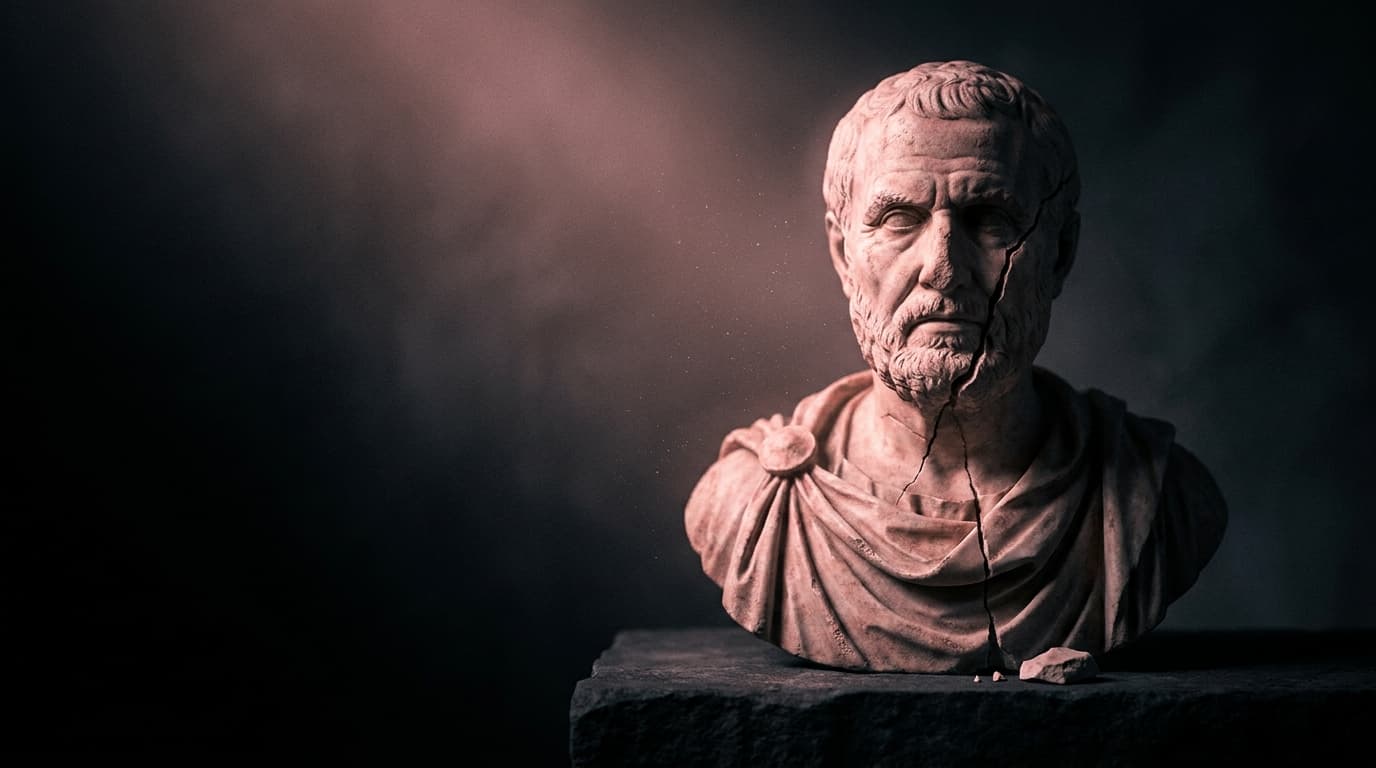
The agency business model is dead. Or is it?
Every six months LinkedIn announces the death of the agency. I've run one for five years — the future of digital agencies, honestly.
Oct 27, 2025 · 5 min
Google's Content API Sunset Is Breaking Feeds Now
Google's Content API for Shopping started throwing errors on September 1. Here's who's actually at risk, and how to check before Shopping ads go dark.
Sep 10, 2026 · 6 min
Claude Fable 5.1 vs GPT-6 Astra: What Actually Changed
Two rival frontier models shipped 48 hours apart at the identical price. Here's what the real numbers mean for your business, not the hype.
Sep 04, 2026 · 6 min